Flowers

The Japanese Tradition of Floral Art
The origin of Ikebana — what is known today as the Japanese art of flower arrangement — is said to have begun with Kuge (供花), the offering of flowers before the Buddha. This was an important duty of the monks at a Tendai Buddhist temple in the heart of Kyoto, a temple with deep connections to Prince Shōtoku. In their pursuit of ever more beautiful offerings, the monks developed a unique style in the way flowers were arranged, and over time, this practice was elevated into a fine art.
In other words, the religious act of “offering flowers to the Buddha” became the very origin of Ikebana. The word Ikenobō — the name of the oldest school of Ikebana — comes from the name of the monks' lodging quarters, which stood beside a pond within the temple grounds, and that name passed directly to the school itself.
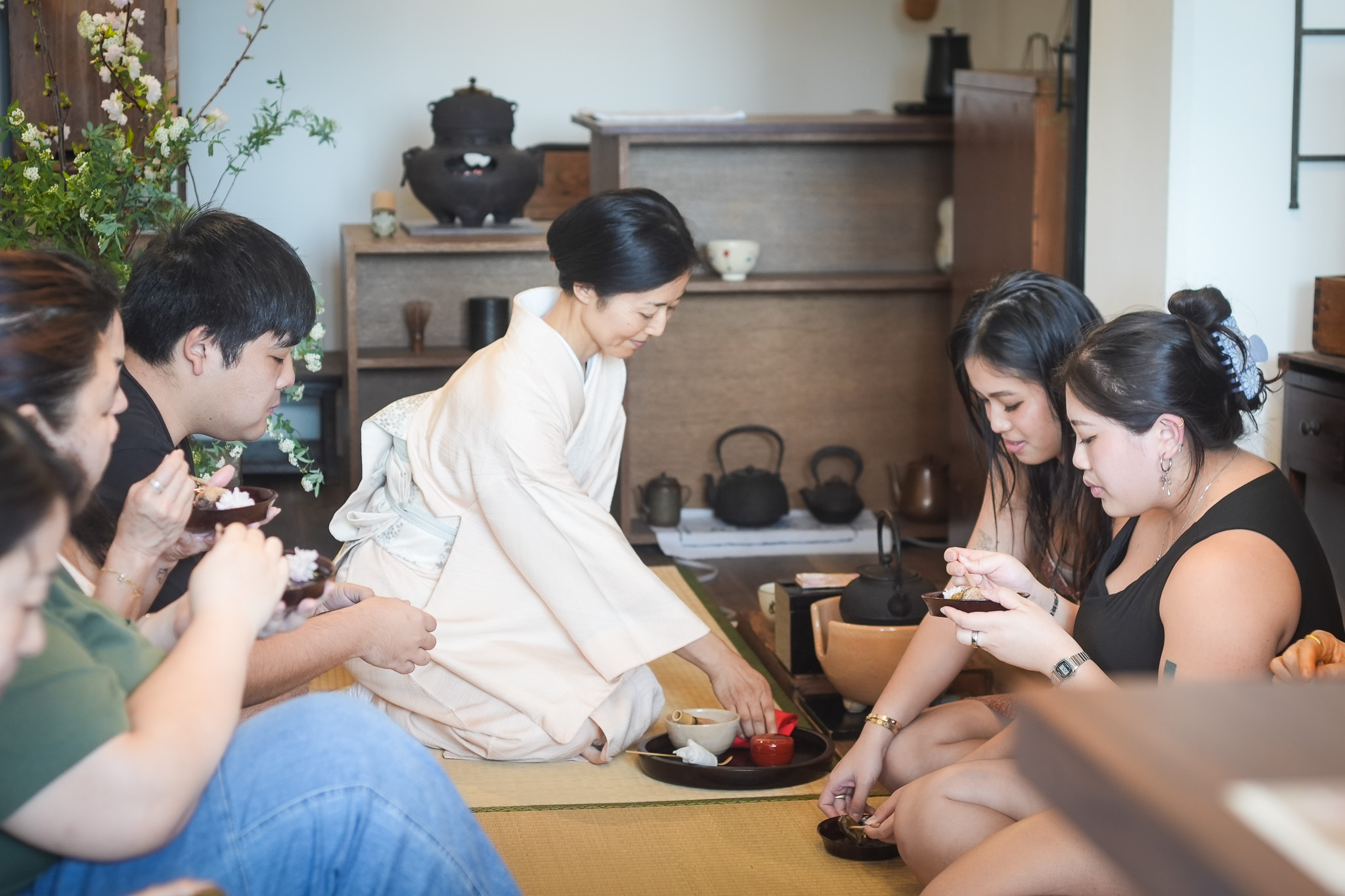
Around 1522 to 1591, Chabana (茶花), the art of flowers for the tea ceremony, came into being. Chabana must never become the centerpiece — its role is solely to create the atmosphere of the space. This is its fundamental difference from Seika. The words attributed to Sen no Rikyū, “as if growing in the wild” (No ni aru yō ni), capture the entire essence of Chabana.
From around 1700 to 1790, a great transformation took place within the flourishing culture of the merchant class. In response to Ikenobō's Rikka style, which had grown increasingly complex, a new generation of flower artists began to ask: “Are these flowers not already dead?” From this questioning, Seika (生花) was born. By paring materials down to their absolute minimum and honoring the “true nature of the plant” — its innate will to live — this style established what might be called “the beauty of negative space” (Ma no bi, 余白の美), a sensibility shared with haiku and the tea ceremony. This spirit resonates deeply with the aesthetic of Chabana proposed by Sen no Rikyū in the late 1500s: “as if growing in the wild.”
From around 1900, a new movement began to stir — influenced by Western art and artistic thought, a fresh style known as Jiyūka (自由花), or “free-style flower arrangement,” emerged, unbound by traditional forms. Then, from the 1950s through the 1980s, artists began to present concepts such as “flowers without flowers” and “making space itself the artwork,” evolving Ikebana into a fully realized form of installation art. In the spirit of freedom and creativity that marked the postwar era, the avant-garde Ikebana movement flourished with great energy.
As globalization advanced, Ikebana spread widely across the world. The major schools — Ikenobō, Sōgetsu-ryū, and Ohara-ryū — all established international branches, and “IKEBANA” became a word recognized around the globe. At the same time, the spread of social media has sparked a rediscovery of Ikebana's beauty among younger generations. More and more flower artists are sharing their work on Instagram and other platforms, and new ways of learning have emerged that are no longer bound by the traditional master-apprentice system or the Iemoto hierarchy.
Furthermore, amid a growing worldwide interest in minimalism and Zen aesthetics, Sen no Rikyū's “as if growing in the wild” and Seika's “beauty of negative space” are being reappraised in the contemporary contexts of wellness and spatial design.
Ikebana Styles Ikebana Schools
The Four Major Schools of Ikebana
Ikenobō
Ikenobō Senkei was recorded in 1462 as a master of flower arrangement — the oldest known record in the history of Ikebana.
The subsequent history of Seika reached a golden age between 1573 and 1650, when the second-generation master Ikenobō Senkō II was at his peak. He created monumental Rikka arrangements using over 100 branches, establishing Ikenobō's golden era.
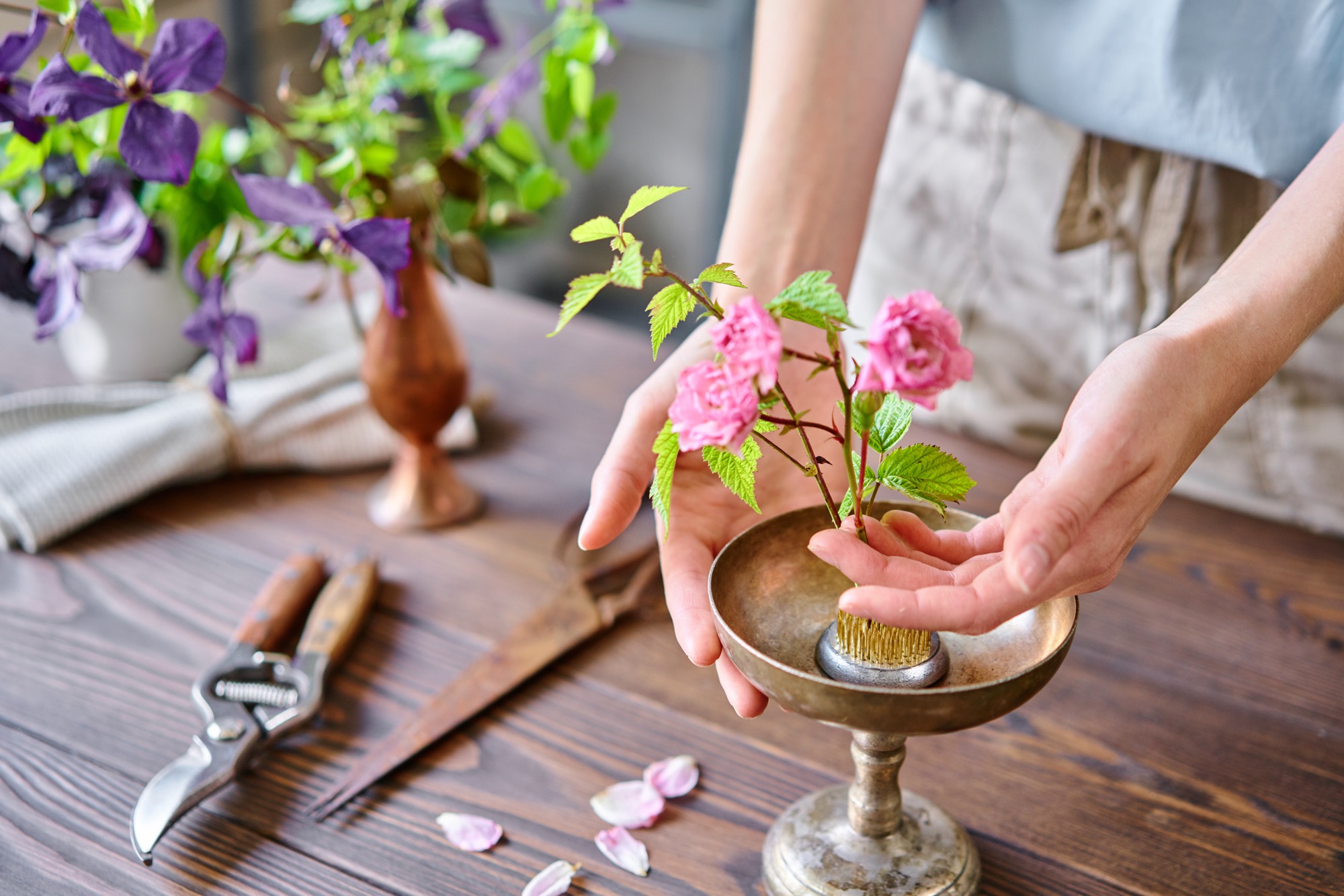
Koryū
Established in the early 18th century (mid-Edo period), Koryū was born from the townspeople's culture of Edo — a school rooted in accessibility and practicality.
In contrast to Ikenobō's elaborate Rikka style, Koryū pursued a simple, crisp beauty. It became widely beloved among the people of Edo for its specialty in water plants.
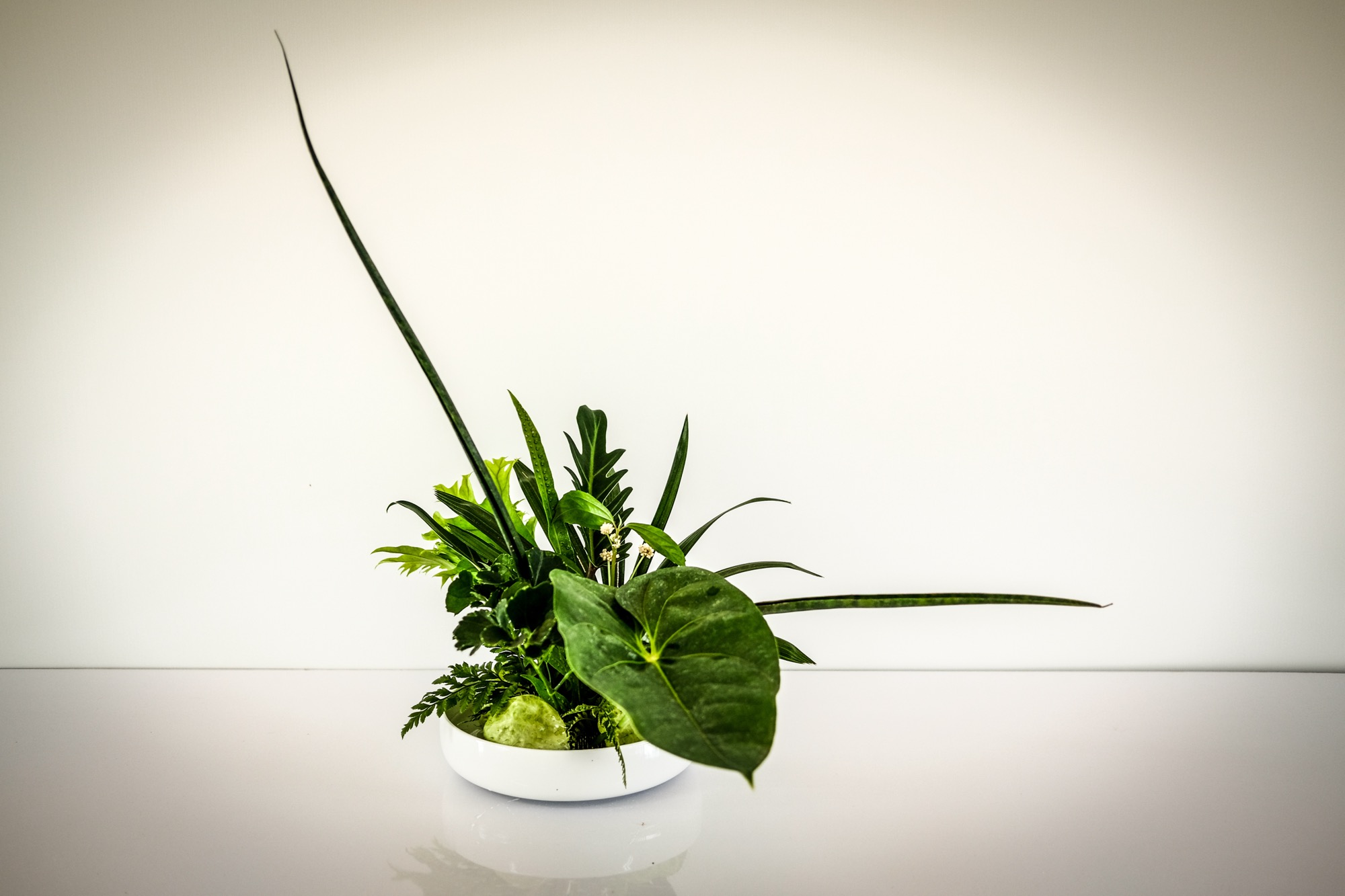
Ohara School
In the late 1890s (mid-Meiji era), Ohara Unshin founded a school with a flexible philosophy: "rooted in tradition, yet always in step with modern life."
Its most defining concept is "arranging the scenery of nature within a shallow vessel" — bringing an expansive natural landscape into the home.
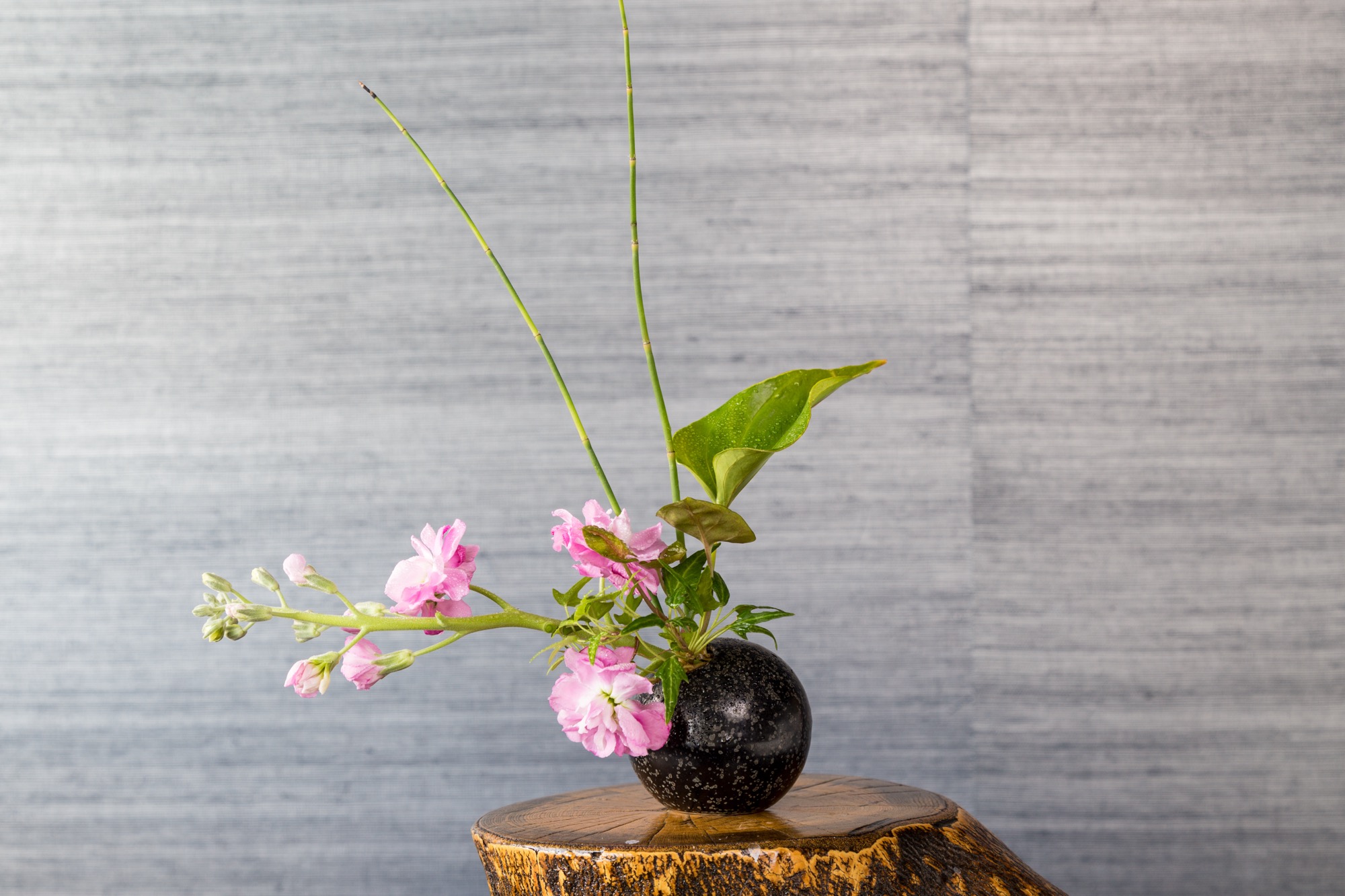
Sōgetsu School
In 1927, Teshigahara Sōfu established a boldly avant-garde style — calling for liberation from fixed "forms." Embracing materials such as iron and plastic.
The Sōgetsu School elevated individual creative freedom as its guiding principle, redefining Ikebana as a personal artistic expression without boundaries.
Flowers of Japan, Now
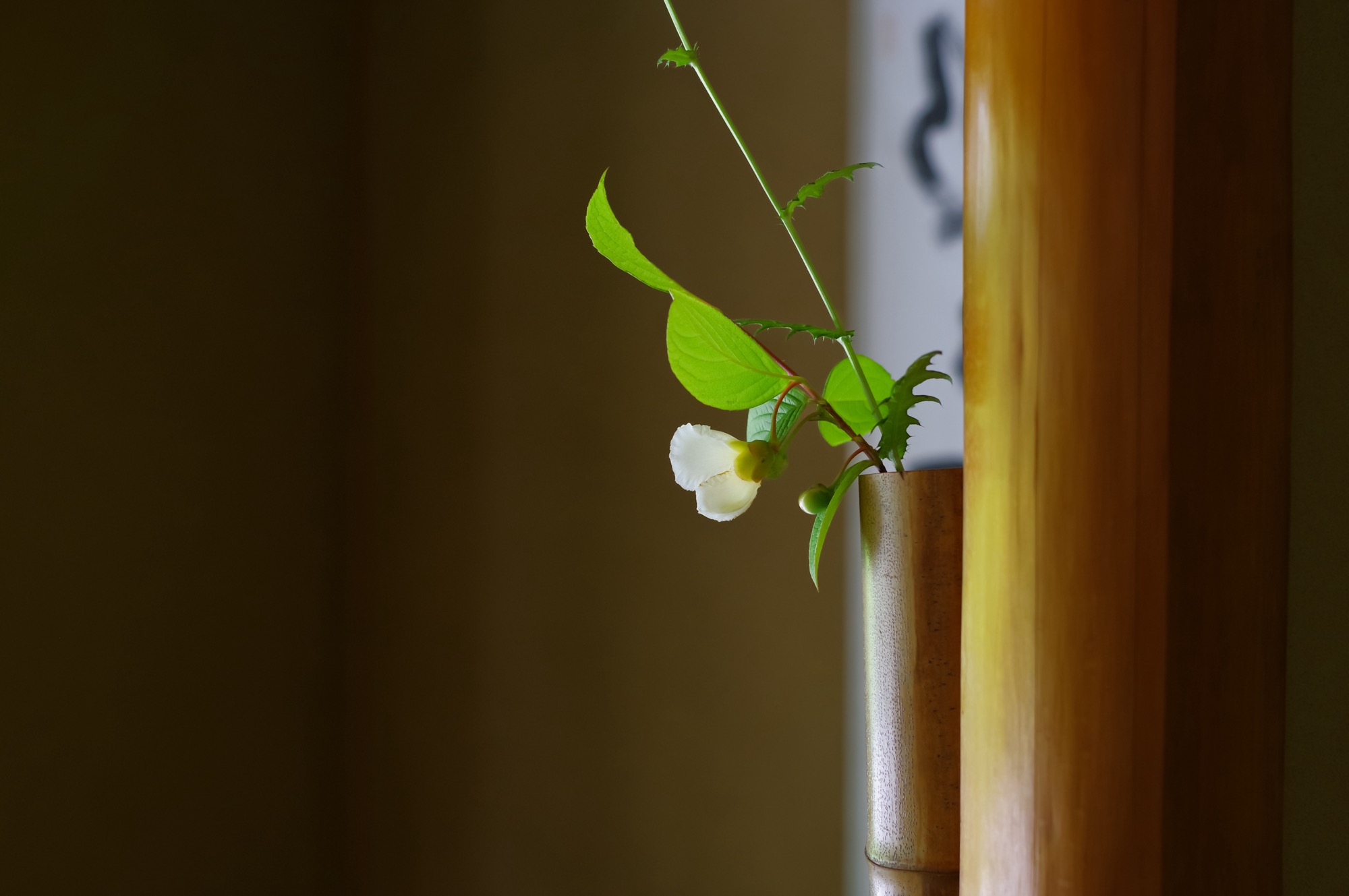
Chabana
Flowers of the Tea Room. Arranged with Zen-like simplicity, chabana is defined by the philosophy: "Today's flower, for today alone."
It seeks to capture the fleeting beauty of a single bloom at its absolute seasonal peak — neither ahead nor behind, just one breath before it fully opens.
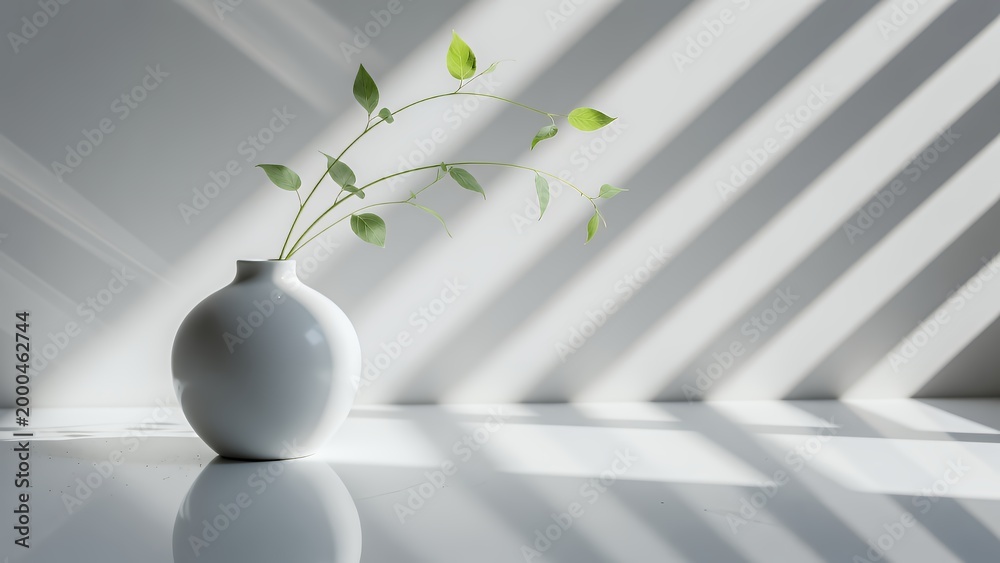
Ichirin-zashi
Rooted in Japan's compact living spaces and the centuries-old tradition of chabana, the practice of arranging a single bloom in the modern style remains distinctly Japanese.
A single flower can bring rhythm, season, and quiet focus to a room, making the smallest vessel feel like a complete expression of space.
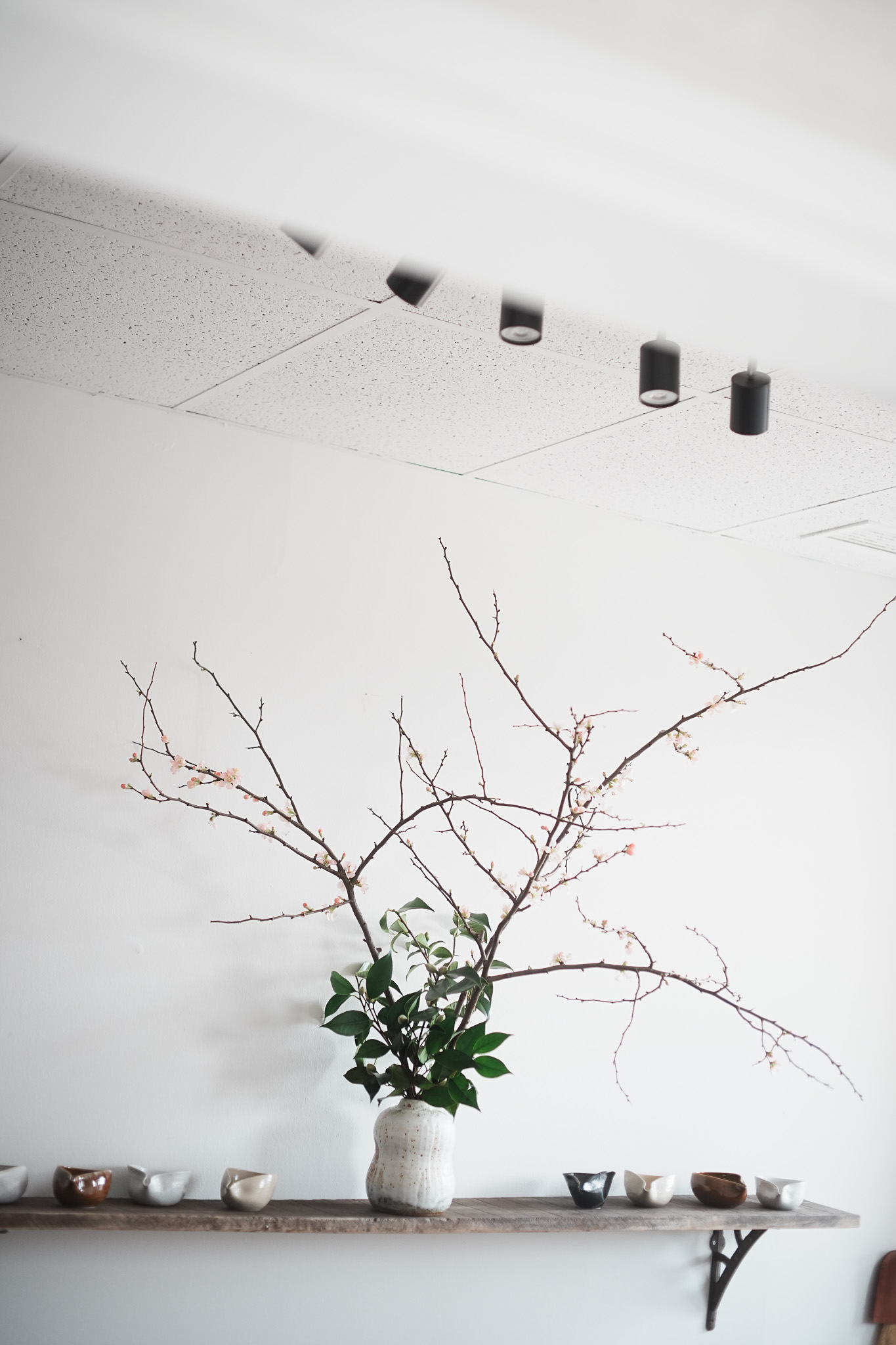
Nageire
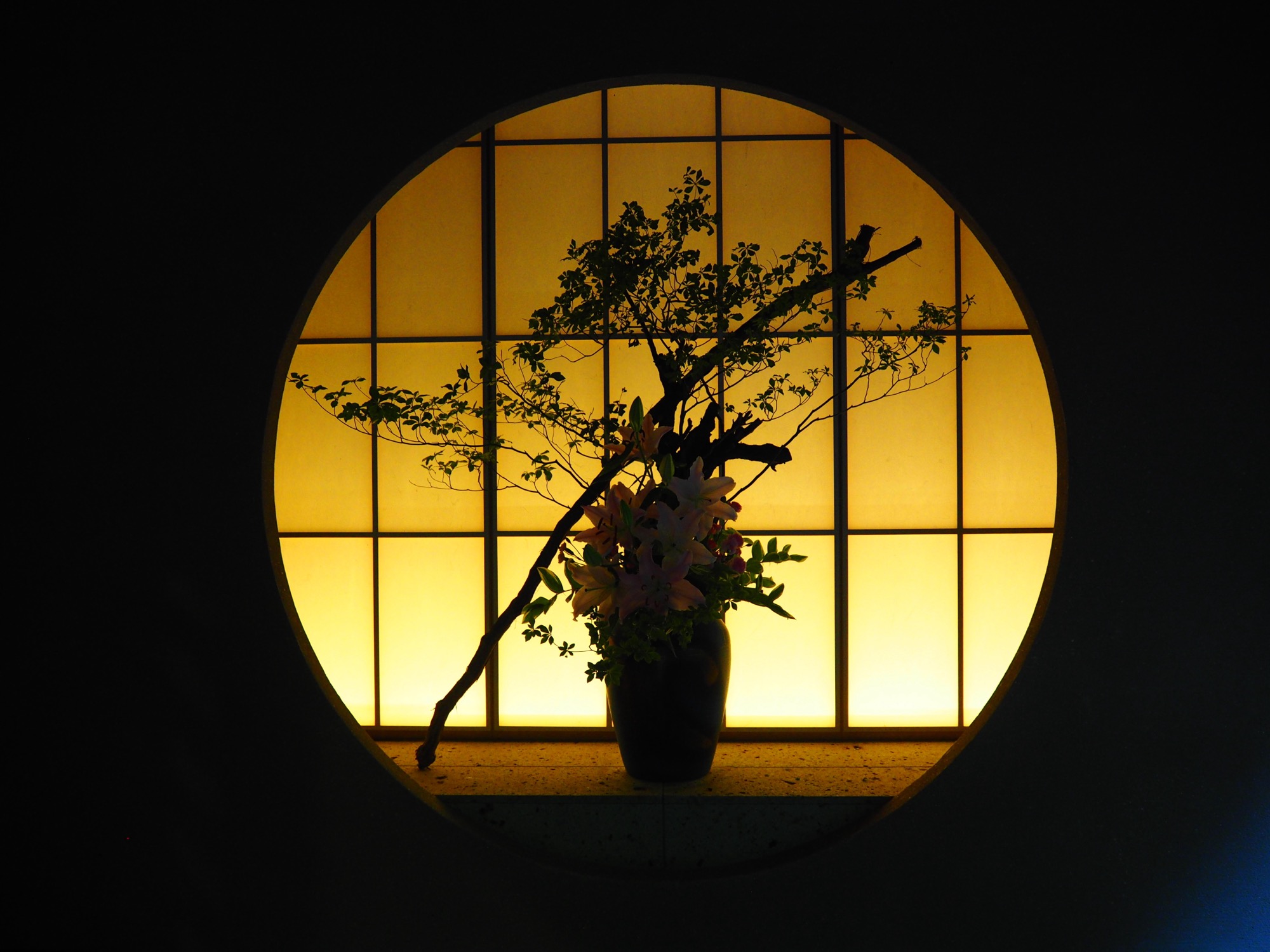
Nageire refers to the art of arranging flowers in a water-holding vessel in their most natural state. The name does not mean to "throw" flowers, but rather signifies the freedom to let them lean or curve naturally.
Its essence lies in capturing the raw, unaltered beauty of plants within a single vase. While this style has no rigid rules, it represents a universal way of interacting with flowers seen worldwide. In Japan, this philosophy has been honored and passed down since around 1600, celebrating a beauty that remains true to nature.
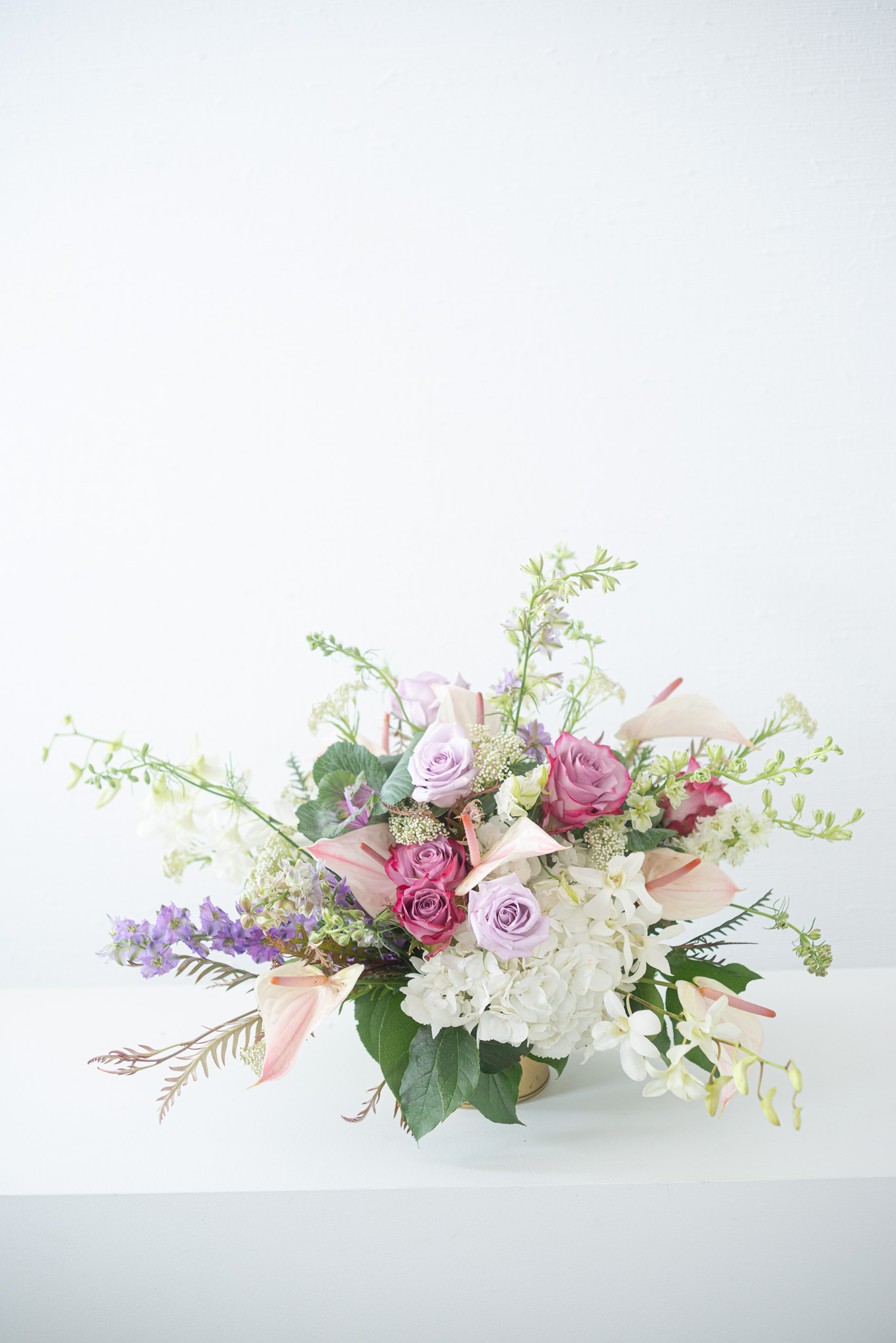
Flower Arrangement
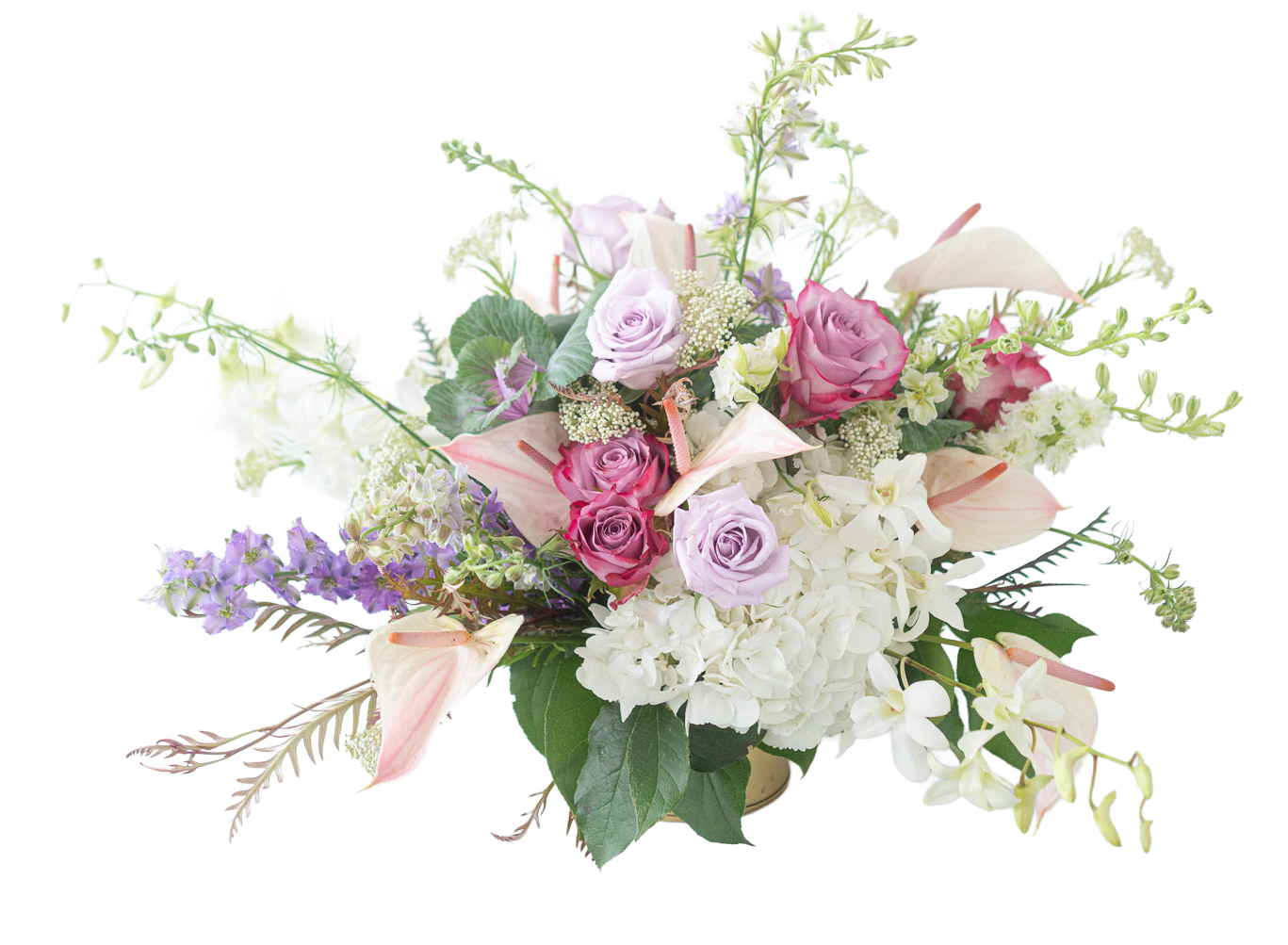
Ikebana places great emphasis on spiritual cultivation and harmony with nature, embracing an "aesthetic of subtraction" that values space and negative space. Flower arrangement, on the other hand, is a Western-influenced floral style that took firm root in modern society around 1900 — using floral foam to arrange flowers for decoration and as gifts.
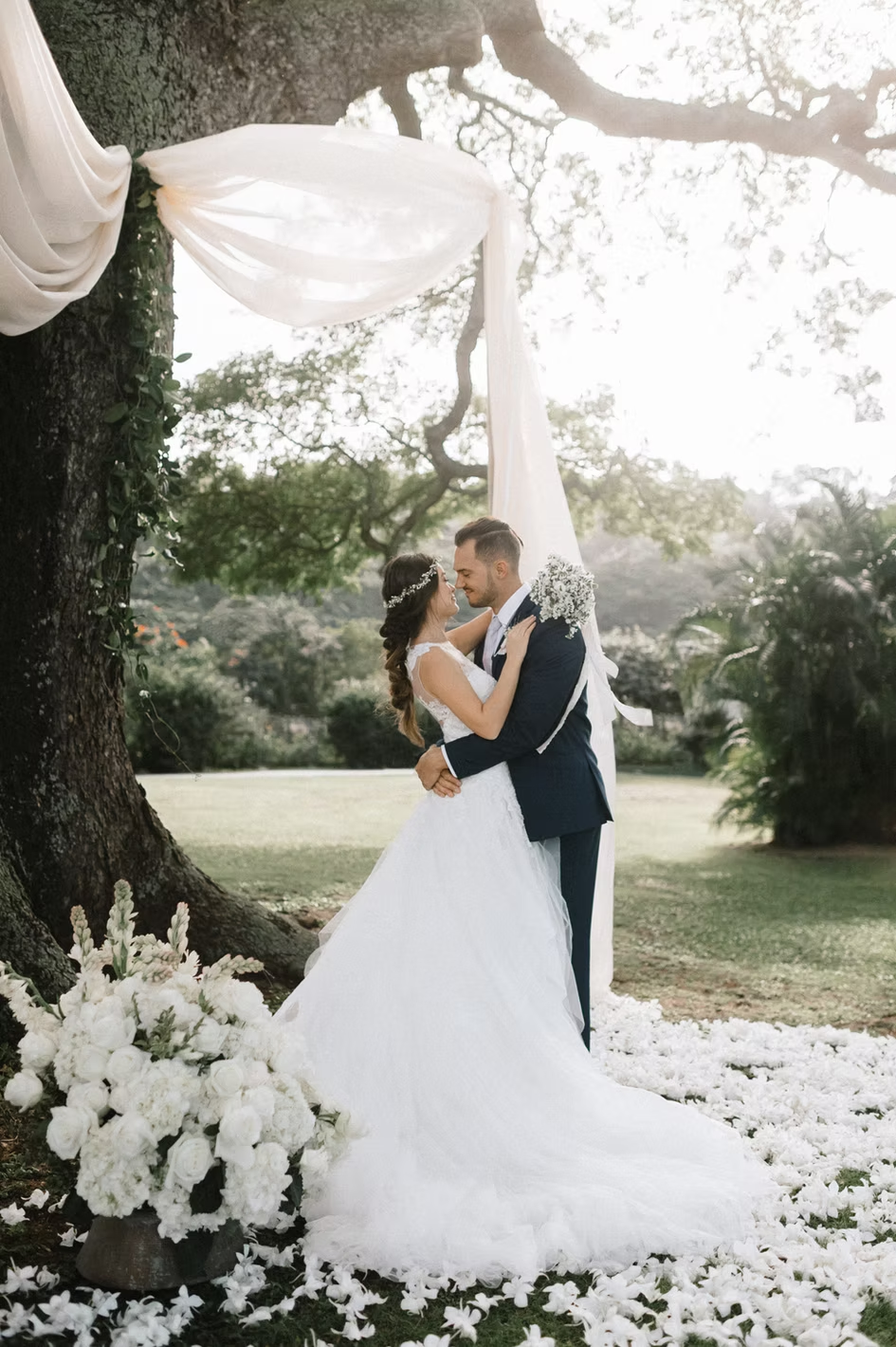
Flower arrangement follows an "aesthetic of addition," prioritizing decorative beauty and visual vibrancy. It typically features an abundance of colorful blooms arranged to fill every space, and has come to play an important role not only in the home, but also at weddings, events, and elegant parties. Today, flower arrangement has evolved into a remarkably versatile floral art form — one that can express a distinctly Japanese sensibility while also evoking a Western atmosphere. At MAnYU Flowers, we welcome orders for a wide range of occasions, from celebrations and graduation ceremonies to funeral flowers. Please feel free to reach out to us through our Contact Page.
Arrange Flowers, Your Way
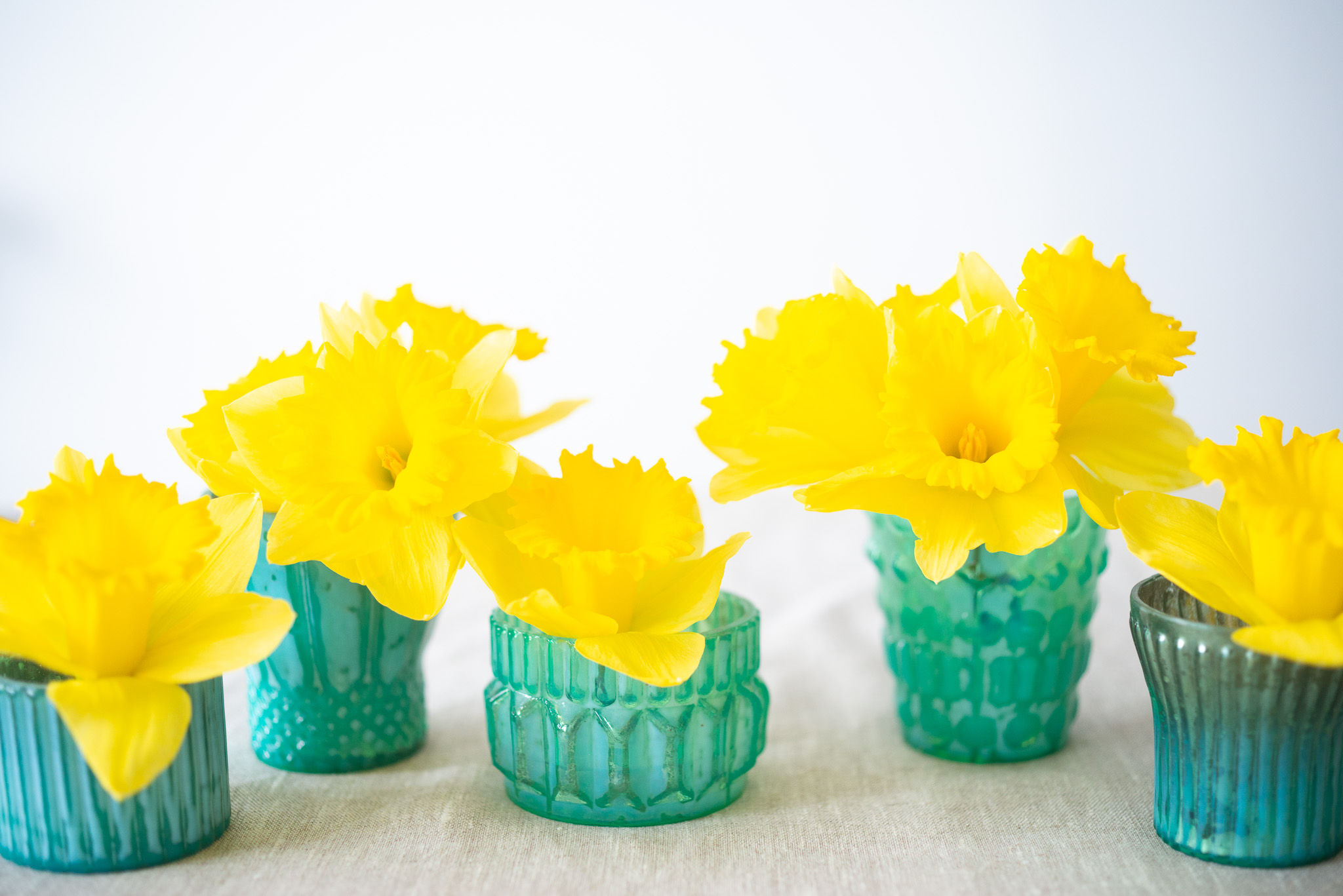
Simple Flower Arrangement
When decorating your home, shop, or favorite space with flowers, paying attention to the overall atmosphere — rather than focusing solely on the vessel — will help everything come together naturally.
Consider the color and texture of your walls and table, coordinate with your tablecloth and tableware, or create a look around a specific theme. The background that frames your flowers matters just as much as the blooms themselves.
One simple tip: don’t limit yourself to vases. Anything that holds water will do — a salad bowl, a mug, an empty bottle or tin. Use what you have around you, follow your inspiration, and enjoy the process freely.
When choosing flowers, seasonal blooms are a wonderful place to start. Ask your local florist, or look it up with AI — designing with flowers that are only available right now creates an arrangement that feels, somehow, just right. Of course, many flowers are available year-round, so once the habit of arranging takes hold, explore by color, by shape, by whatever moves you.
Here in Hawaii, strict agricultural quarantine laws mean that the variety of flowers available on our island is just a fraction of what you might find in Tokyo, New York, or London. Even so, being surrounded by flowers we love every single day feels like a true gift.
We hope you’ll bring a little of that happiness to your own table. The heart of anyone who pauses to admire a flower in bloom will always be gently healed by its quiet power.
When you feel ready to explore further, turn your attention to the vessel itself. Understanding the vessel deepens the conversation between flower and space.
Any Vessel. Any Flower.
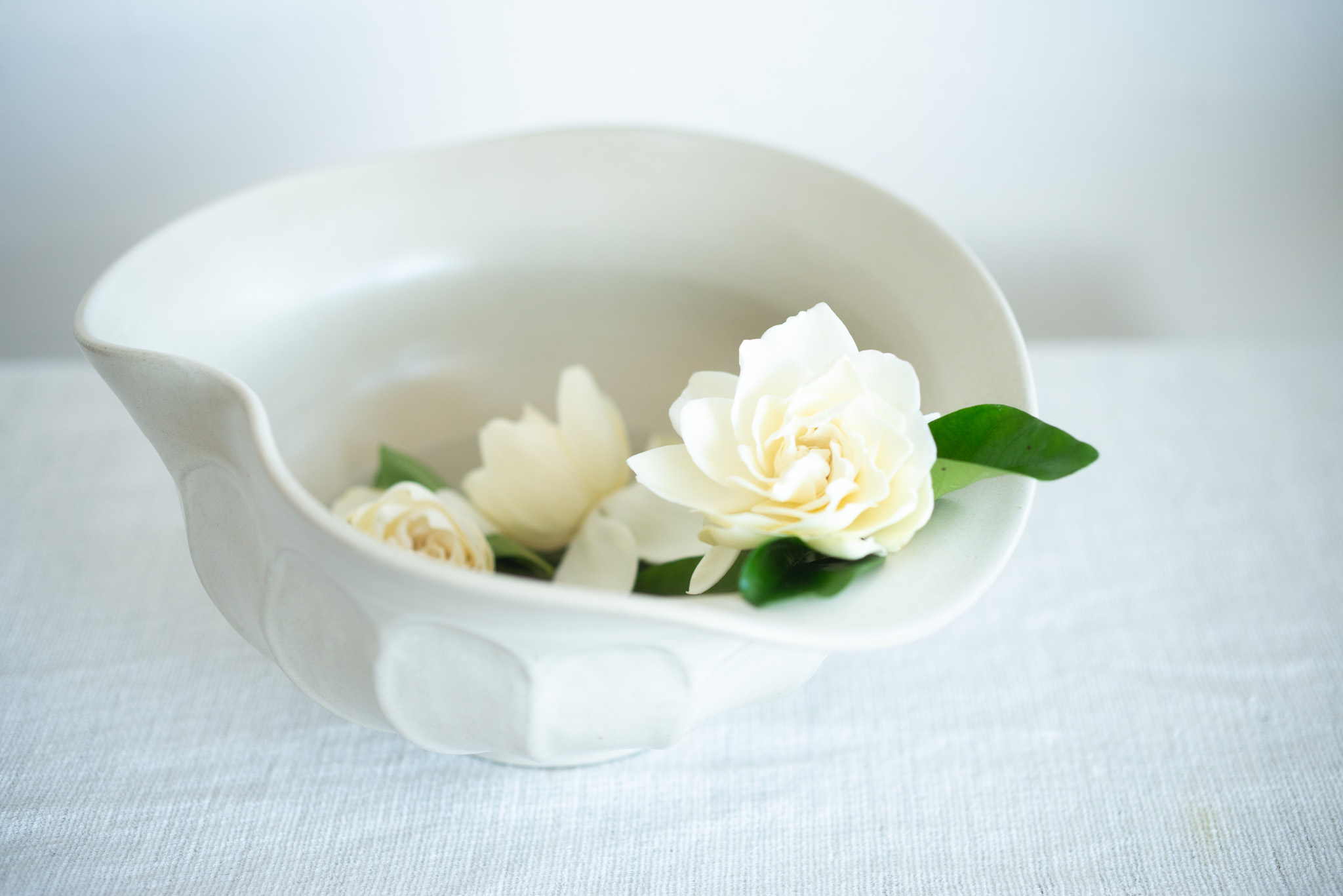
One Stem, One Vessel
Japanese flower vessels carry centuries of history and refined aesthetic sensibility. Born from the worlds of Chabana and Kado, these vessels were never merely containers — they expressed space, season, and even silence.
In Japan, the habit of keeping flowers at home has historically been less common than in the West. This is because flowers were long considered something sacred, offered to Buddha or the gods. As a result, vessels were given a sense of hierarchy, and certain vessels were reserved for specific rooms or occasions.
Today, that cultural context is less widely known, but the influence remains. Compact Japanese homes have inspired a quiet market for smaller vases — designed to hold just a few stems — found in interior shops throughout the country.
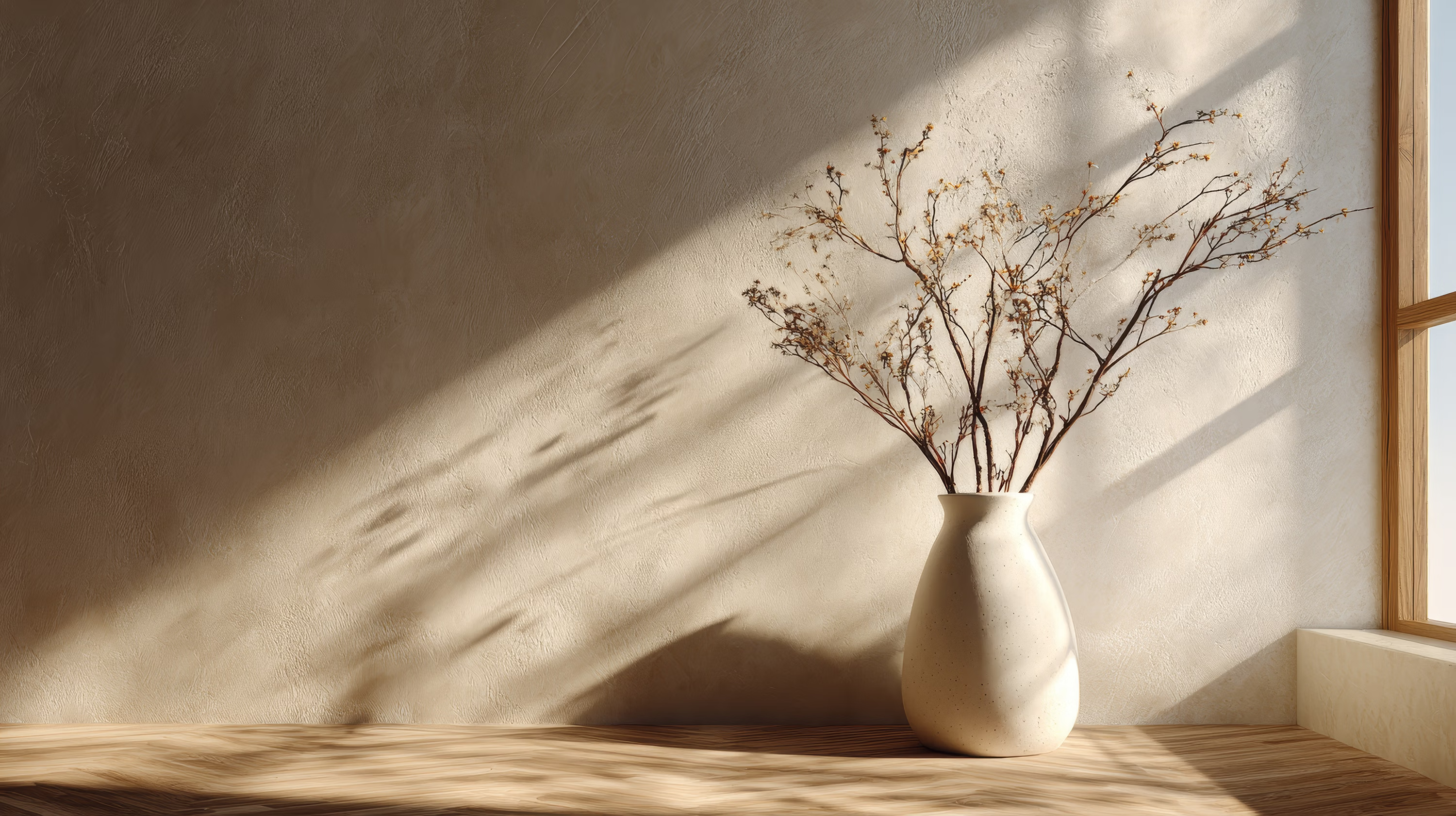
For those living in the larger spaces more common in the West, we warmly recommend embracing the spirit of wabi-sabi. A single narrow-mouthed vessel, holding nothing more than one simple branch or one quiet bloom, brings a uniquely elegant accent to any room — and makes the art of flower arranging wonderfully approachable.
The material — glass, metal, ceramic — matters less than you might think. What matters is scale: choosing a vessel that belongs to its space. It is tempting to fill a vase to abundance, but a few stems placed thoughtfully in a vessel suited to the room, in light that is allowed to breathe, can turn anyone into a flower artist.
Be conscious of the vessel. Be conscious of the space. Then let the flowers follow.
Our online shop carries a carefully selected range of flower vessels. We hope you find one that speaks to you.
For any questions about flowers or arrangements, please feel free to reach out through our contact form.
Flower Workshop
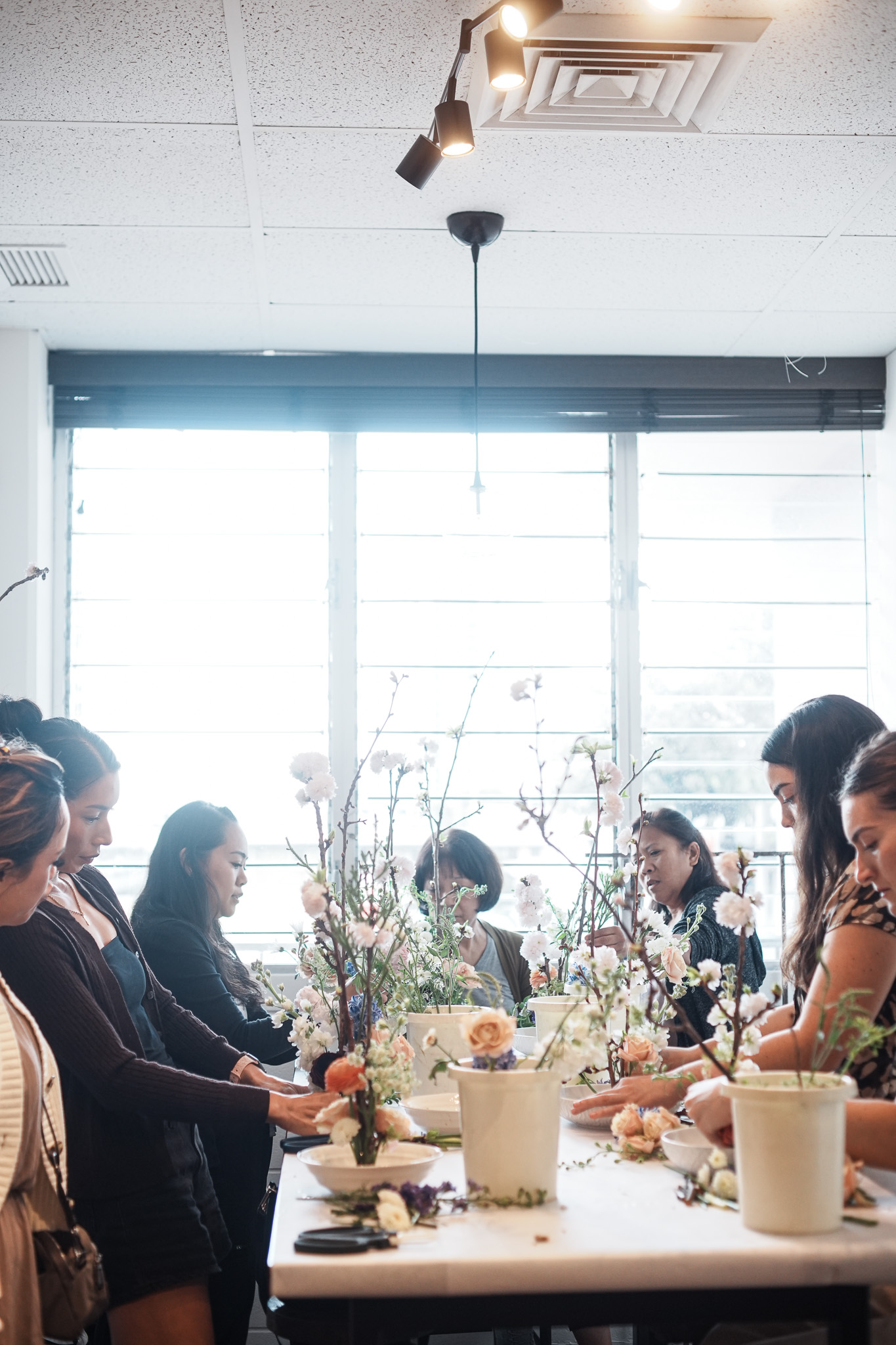
Time to Play with Flowers
At A la Maison, we host flower workshops several times a year. From lessons exploring our own unique style of Ikebana, to herb arrangements on wreath bases, to floral arrangement classes featuring WABARA — the exquisite Japanese rose — enjoyed alongside a cup of special rose tea.
Our most beloved annual event is the Fresh Green Christmas Wreath Workshop. For groups of 8 or more, private workshop bookings are also available.